The Best Time to Run a Webinar In UK, US and Australian Time Zones
Share
Here's the short answer, because if you searched for this you probably want it quickly: there is no time of day when the UK, the US and Australia are all awake, at work, and willing to watch a webinar. The strongest two-region slots are 3pm to 4pm UK time for a UK and US audience, and 8am to 9am UK time for a UK and Australian audience. If you need all three, you'll want a different strategy entirely, and we'll get to that.
The longer answer is worth understanding, because a lot of teams schedule global webinars on hope rather than arithmetic, then wonder why their Sydney registrants never turn up.
Why there's no perfect time
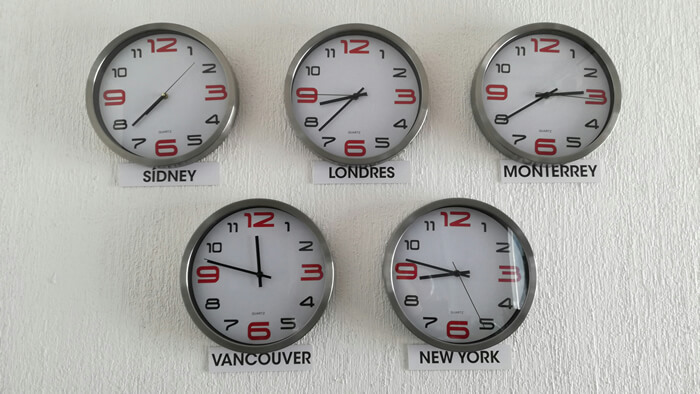
Put the three regions on a clock and the problem is obvious. When it's midday in London, it's 7am in New York, 4am in Los Angeles, and 10pm or 11pm in Sydney depending on the season. Whatever slot you pick, someone is asleep.
The UK to US overlap is generous. London is five hours ahead of New York and eight ahead of the West Coast, so the UK afternoon lines up neatly with the American morning.
The UK to Australia overlap is narrow but real. Sydney is nine to eleven hours ahead of London, which means the very start of the UK working day meets the very end of the Australian one.
The US to Australia overlap barely exists during the working week. When it's 5pm in New York, it's already 8am or 9am the next morning in Sydney. That's the one pairing with a workable window, and it's tight.
All three at once? The least bad option is around 9pm to 10pm UK time, which lands at 4pm to 5pm in New York and 8am to 9am the next day in Sydney. It works on paper and fails in practice, because you're asking your UK audience, and probably your UK presenters, to give up their evening. We don't recommend building a programme on it.
The best time for a UK and US webinar
Aim for 3pm or 4pm UK time, Tuesday to Thursday.
A 4pm London start is 11am in New York and 8am in San Francisco. Your UK attendees are past the afternoon slump but not yet packing up, East Coast attendees have cleared their morning email, and the West Coast can join with a coffee. It's the closest thing to a universally civilised slot in B2B webinars, which is exactly why so many companies use it. If your attendance is skewing East Coast, 3pm UK buys you a 10am ET start and loses almost nothing in London.
Mondays and Fridays underperform for most B2B audiences. Monday mornings get sacrificed to planning and backlog, and Friday afternoons are a write-off in at least one of your time zones no matter what you do.
The best time for a UK and Australian webinar
Aim for 8am to 9am UK time, which is 5pm to 8pm in Sydney depending on the time of year.
This one takes more care because the seasonal swing is bigger. In the northern summer, 9am in London is 6pm in Sydney, which is late but workable for a motivated audience. In the northern winter, that same 9am start becomes 8pm in Sydney, and you'll feel it in your attendance figures. If Australia and New Zealand are a priority audience between October and March, move your start to 7am or 7.30am UK time, or accept that this session belongs to the on-demand strategy below.
One more wrinkle: Australia has multiple time zones of its own, and Queensland doesn't observe daylight saving at all. If your audience is spread between Sydney, Melbourne, Brisbane and Perth, always publish the start time in each city on your registration page rather than leaving people to do the conversion. Perth is two to three hours behind Sydney, which is enough to turn a comfortable 6pm slot into a mid-afternoon interruption.
The best time for a US and Australian webinar
If the UK isn't in the picture, your window is late afternoon US time. A 4pm start in New York is 1pm in Los Angeles and 8am the next morning in Sydney. It's genuinely fine for all three of those audiences, and it's the slot a lot of APAC-focused American companies quietly rely on.
The catch is presenter logistics. Someone is always doing this at the edge of their day, so decide upfront whose edge it is and rotate if you run these regularly.
What to do when you need all three regions
Stop trying to solve it with a single live slot. There are three approaches that actually work.
Pick a primary region and design for it. Decide where your pipeline actually comes from, schedule for that audience, and treat the other regions as an on-demand audience from day one. This is what most teams are doing by accident anyway. Doing it deliberately means your on-demand content gets proper treatment: chapters, a searchable transcript, and a follow-up email that goes out at a sensible local hour rather than 3am.
Run the session twice. One delivery at 4pm UK for Europe and the Americas, a second at 9am UK for the UK and APAC. It costs you a second hour of presenter time, not a second event build. Everything else, the slides, the registration flow, the follow-up sequence, is shared. For flagship sessions this is almost always worth it, and the second delivery is usually sharper than the first.
Make the recording the product. For some topics, live attendance genuinely matters: Q&A-heavy sessions, product launches, anything interactive. For plenty of others it doesn't, and pretending otherwise just inflates your no-show rate. If a session is really a broadcast, say so, run it once at the best slot for your primary region, and put the effort into making the recording easy to find and easy to skim.
Whichever route you take, send reminder emails in the recipient's local time zone, not yours. A reminder that arrives at 2am gets buried under the morning's email, and the access link with it.
Watch out for the daylight saving mess
Twice a year, the three regions change their clocks on different dates, and for a few weeks the usual conversions are wrong.
In March, the US moves first (the second Sunday), the UK follows (the last Sunday), and Australia doesn't leave daylight saving until the first Sunday of April. In October, Australia moves first, the UK changes at the end of the month, and the US holds out until early November.
If you schedule a recurring webinar series through those windows, check every date individually. A slot that was 6pm in Sydney in September is 8pm by mid-October, and nobody will email to tell you. They'll just stop coming, and you'll be left staring at an attendance dip you can't explain. Your post-event analytics will show you the drop; this is one of the few cases where the cause is a calendar rather than your content.
Quick reference
Audience | Start time | What that means locally |
|---|---|---|
UK + US | 3pm to 4pm UK | 10am to 11am New York, 7am to 8am LA |
UK + Australia | 8am to 9am UK | 5pm to 8pm Sydney, seasonal |
US + Australia | 4pm New York | 1pm LA, 8am next day Sydney |
All three | Don't chase one slot | Run twice, or lead with on-demand |
Tuesday to Thursday beats Monday and Friday in every region, and the exact hour matters less than being consistent once you've found a slot that works. If you're still working out how often to run sessions rather than when, our guide to how regular webinars boost lead generation covers the programme side.
The teams that do this well aren't the ones with a magic time slot. They're the ones who decided who their webinar is actually for, scheduled for those people, and built a decent path for everyone else to catch up. Get that decision right and the clock maths mostly takes care of itself.
Inspired for your next online event?
See the streamGo platform in action!